Professional system
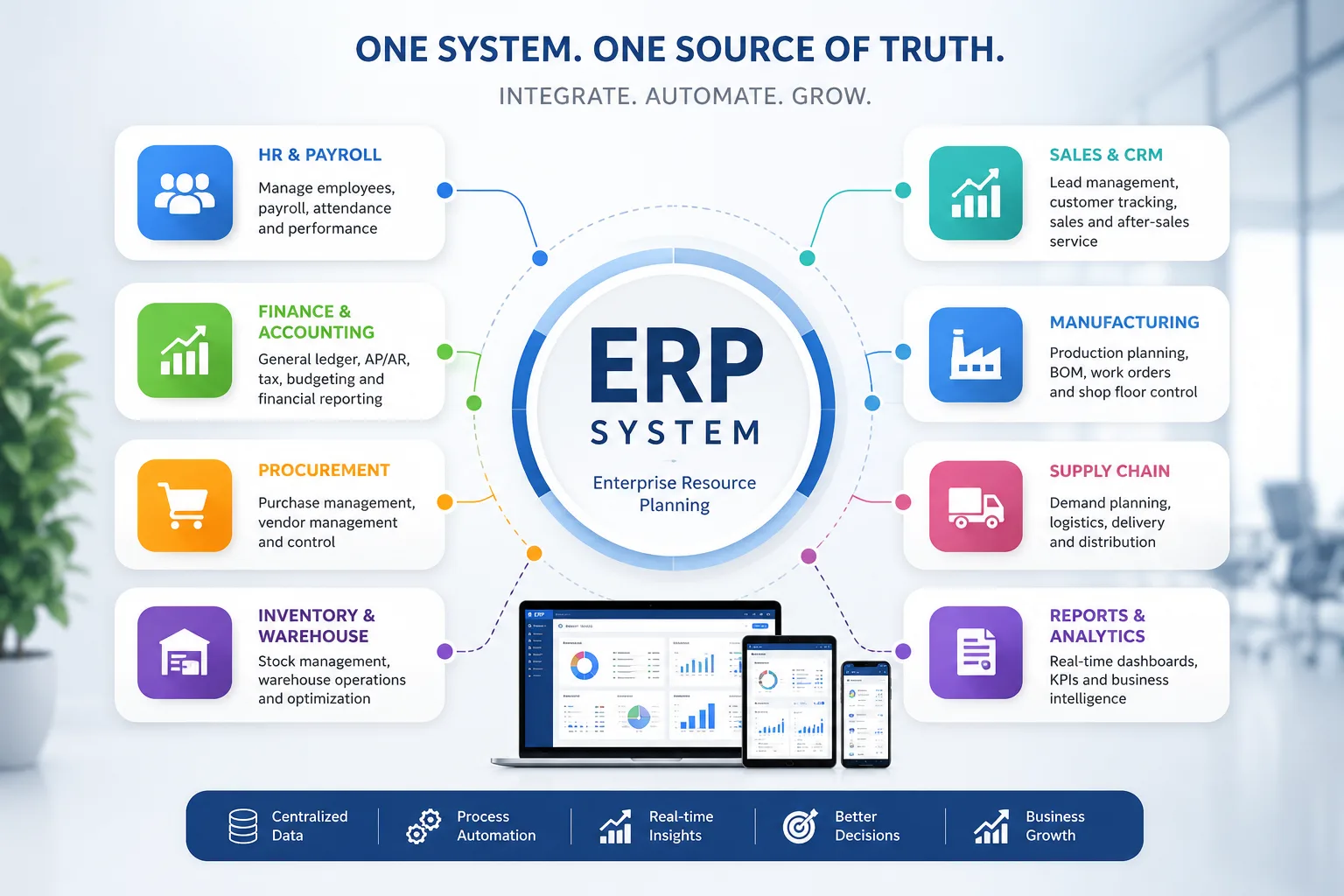
ERP (Enterprise Resource Planning)
An integrated business management platform that connects finance, sales, purchasing, inventory, manufacturing, HR, and operations into a single centralized syst
Overview
What this system is and how it helps your organisation.
An Enterprise Resource Planning (ERP) System is a comprehensive business management platform that integrates all core business functions into a single centralized system. Rather than operating separate software for finance, inventory, sales, purchasing, production, human resources, and customer management, an ERP consolidates all business processes into one unified platform.
ERP enables organizations to streamline operations, improve efficiency, eliminate duplicate data entry, enhance collaboration across departments, and gain real-time visibility into business performance. By providing accurate and timely information, ERP empowers management to make informed decisions, optimize resources, and drive sustainable growth.
Whether a business operates from a single location or across multiple branches, an ERP system serves as the digital backbone of the organization, connecting people, processes, and data in real time.
Business Challenges Solved by ERP
Many organizations face challenges such as:
Disconnected systems and spreadsheets
Duplicate data entry
Inaccurate inventory records
Delayed financial reporting
Poor visibility into business operations
Manual approval processes
Inefficient communication between departments
Difficulty managing multiple branches
Limited access to real-time information
ERP addresses these challenges by creating a single source of truth for the entire organization.
ERP enables organizations to streamline operations, improve efficiency, eliminate duplicate data entry, enhance collaboration across departments, and gain real-time visibility into business performance. By providing accurate and timely information, ERP empowers management to make informed decisions, optimize resources, and drive sustainable growth.
Whether a business operates from a single location or across multiple branches, an ERP system serves as the digital backbone of the organization, connecting people, processes, and data in real time.
Business Challenges Solved by ERP
Many organizations face challenges such as:
Disconnected systems and spreadsheets
Duplicate data entry
Inaccurate inventory records
Delayed financial reporting
Poor visibility into business operations
Manual approval processes
Inefficient communication between departments
Difficulty managing multiple branches
Limited access to real-time information
ERP addresses these challenges by creating a single source of truth for the entire organization.
Key features
Capabilities, benefits, and what is included.
Key Business Benefits
Centralized Data Management
All business information is stored within a single system, ensuring consistency, accuracy, and accessibility across departments.
Real-Time Visibility
Management can monitor operations, sales performance, inventory levels, financial status, and employee productivity through live dashboards and reports.
Increased Operational Efficiency
Automation of business processes reduces manual work, minimizes errors, and improves overall productivity.
Better Decision Making
Advanced reporting and business intelligence tools provide actionable insights for strategic planning and operational improvements.
Cost Reduction
Optimized inventory management, improved procurement processes, and reduced administrative overhead contribute to significant cost savings.
Enhanced Customer Satisfaction
Improved order processing, faster response times, and better service delivery help strengthen customer relationships.
Scalability
ERP systems grow with the business, supporting multiple branches, locations, currencies, and business units.
Financial Management
Inventory Management
Procurement & Purchasing
Sales Management
Production Planning
Human Resource Management
Fixed Asset Management
Business Intelligence Dashboards
Workflow Automation
Multi-Branch Operations
Centralized Data Management
All business information is stored within a single system, ensuring consistency, accuracy, and accessibility across departments.
Real-Time Visibility
Management can monitor operations, sales performance, inventory levels, financial status, and employee productivity through live dashboards and reports.
Increased Operational Efficiency
Automation of business processes reduces manual work, minimizes errors, and improves overall productivity.
Better Decision Making
Advanced reporting and business intelligence tools provide actionable insights for strategic planning and operational improvements.
Cost Reduction
Optimized inventory management, improved procurement processes, and reduced administrative overhead contribute to significant cost savings.
Enhanced Customer Satisfaction
Improved order processing, faster response times, and better service delivery help strengthen customer relationships.
Scalability
ERP systems grow with the business, supporting multiple branches, locations, currencies, and business units.
Financial Management
Inventory Management
Procurement & Purchasing
Sales Management
Production Planning
Human Resource Management
Fixed Asset Management
Business Intelligence Dashboards
Workflow Automation
Multi-Branch Operations